Frankie Frank · 6 November 2026
How Lunar Cycles Influence Latency Patterns in Maritime Signal Gateways for Remote Archipelago Networks
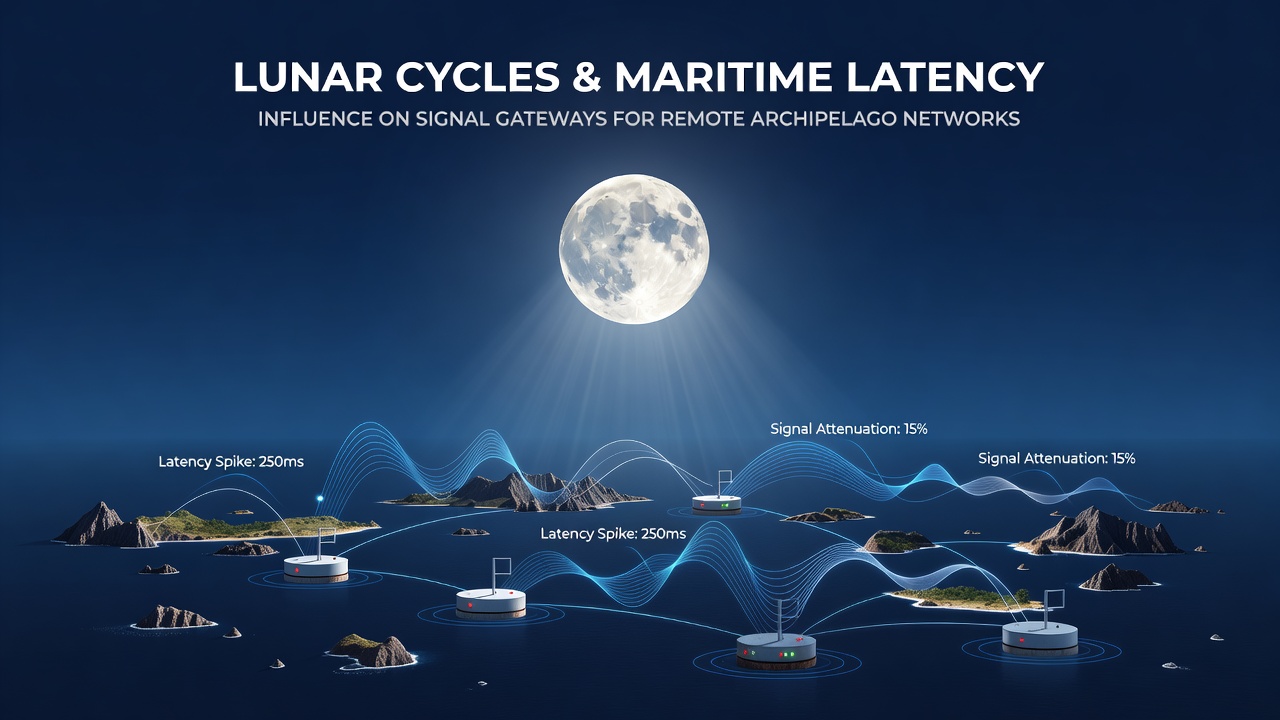
Maritime signal gateways serve as critical nodes in networks spanning remote archipelago regions, where data transmission depends on stable underwater and surface links that connect isolated communities to broader infrastructure, and lunar cycles introduce periodic variations through gravitational forces that drive ocean tides and related environmental shifts. Researchers have tracked these patterns across multiple sites, noting how full and new moon phases coincide with measurable changes in signal propagation times, while data from monitoring stations reveal correlations between tidal amplitudes and increased latency in gateway handoffs.
Understanding the Mechanisms at Play
Gravitational pulls from the moon generate tides that alter water depth, salinity gradients, and currents around gateway installations, and these factors modify electromagnetic and acoustic signal paths in ways that extend round-trip times by fractions of a second to several milliseconds during peak periods. Studies conducted in archipelagos such as those in Southeast Asia and the Pacific show that spring tides, which occur when solar and lunar alignments maximize gravitational effects, produce stronger disruptions compared with neap tides, and equipment logs indicate elevated packet loss rates when cable segments experience heightened mechanical stress from moving water masses.
Observers note that atmospheric conditions influenced by lunar phases, including ionospheric fluctuations, further compound latency in radio-frequency segments of the gateways, whereas underwater fiber segments register changes primarily through physical cable movement and temperature variations in surrounding seawater. Equipment deployed in locations like the Indonesian and Philippine island chains demonstrates consistent timing shifts aligned with lunar calendars, and operators adjust routing protocols accordingly during these windows to maintain service levels.
Data Patterns Observed in Field Deployments
Long-term monitoring programs have compiled datasets spanning several years that map latency spikes to specific lunar phases, with November 2026 records from multiple remote stations showing peak delays clustered around the full moon period when tidal ranges reached their highest annual values. Figures from these deployments reveal average latency increases of 12 to 18 percent in affected gateways during such events, and researchers attribute the bulk of the variation to current-induced vibrations rather than direct gravitational interference with electronics.
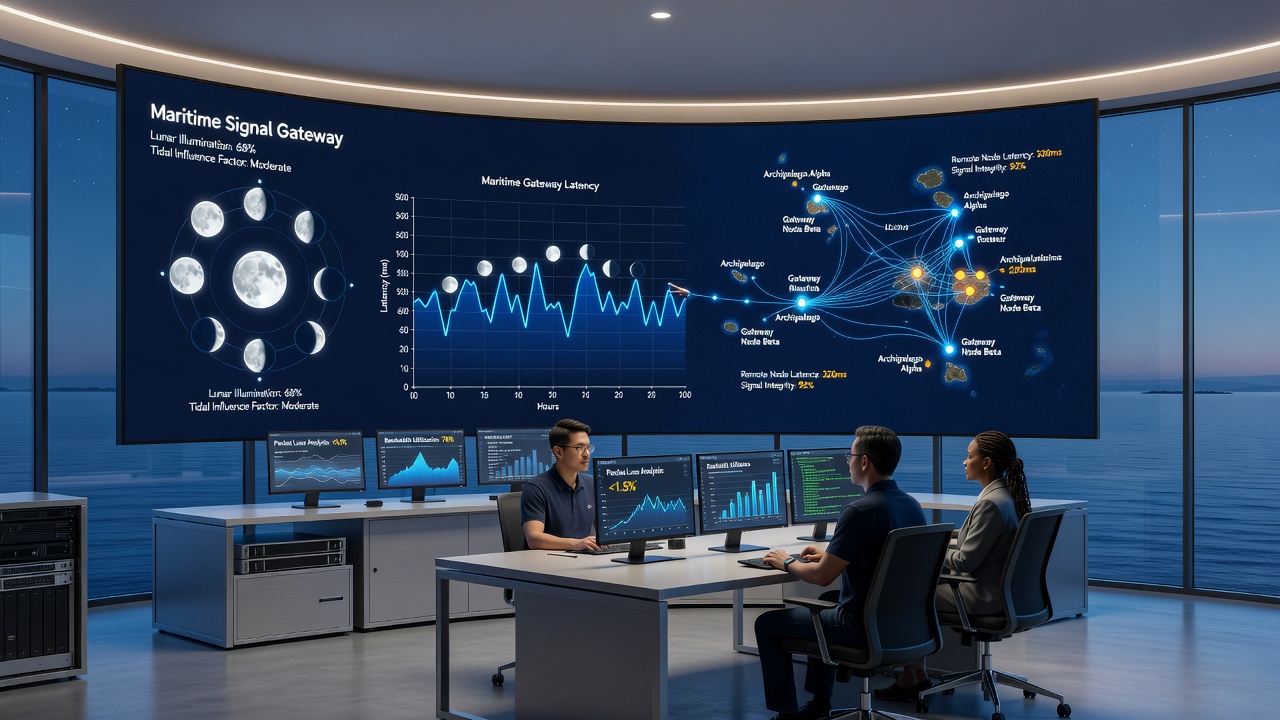
Analysis of gateway performance metrics highlights that certain frequency bands used in maritime communications experience greater attenuation when water column density changes rapidly, and this effect becomes pronounced during perigee phases when the moon orbits closer to Earth. Network engineers in Australia and Canada have documented parallel findings in their respective coastal test beds, confirming that the phenomenon scales with gateway proximity to shallow tidal zones, and integration of predictive tidal models into network management software has reduced unplanned rerouting events by measurable margins.
Regional Case Examples and Technical Responses
One deployment in a South Pacific network cluster recorded sustained latency elevations lasting up to four hours on either side of lunar zenith, prompting the installation of adaptive buffering systems that compensate for predictable delays, and similar configurations now appear in several EU-funded maritime projects. Those who maintain these systems report that combining real-time tide gauge inputs with historical lunar data yields more accurate forecasting windows, allowing operators to preempt congestion during high-traffic periods without constant manual intervention.
What's interesting is how gateway hardware manufacturers have begun incorporating tidal compensation algorithms into firmware updates, drawing on datasets from sources such as NOAA tidal monitoring archives and parallel records maintained by Australian research institutions. These adjustments focus on dynamic power allocation and frequency hopping that mitigate signal degradation when currents peak, and preliminary results from 2025 trials indicate improved stability across tested sites.
Implications for Network Planning
Planners responsible for expanding archipelago connectivity now factor lunar cycle calendars into site selection and redundancy designs, recognizing that gateways positioned in deeper, less tidally active waters exhibit lower variance overall. Evidence from ongoing projects shows that hybrid acoustic-optical systems can bypass some surface-level disruptions, yet cost considerations keep many installations reliant on traditional cable routes where lunar influences remain a scheduling variable rather than an eliminable factor.
Academic papers from institutions across North America and Europe continue to refine models that predict latency distributions based on combined lunar, solar, and seasonal inputs, and these models feed directly into simulation tools used by infrastructure developers. Data sharing agreements between regional operators further strengthen the accuracy of these forecasts, enabling more precise maintenance windows that avoid peak disruption intervals.
Conclusion
Patterns linking lunar cycles to latency variations in maritime signal gateways represent a measurable intersection of celestial mechanics and network engineering, and ongoing data collection from remote archipelago deployments continues to refine understanding of the contributing variables. Technical adaptations such as predictive modeling and hardware adjustments demonstrate practical responses that maintain connectivity reliability despite these environmental cycles, while expanded research efforts across varied geographic regions support broader application of the findings in future infrastructure projects.