Finley Reed · 23 October 2026
Charting Scalability Hurdles in Proprietary Gateway Frameworks for Archipelago-Based Signal Exchange Systems
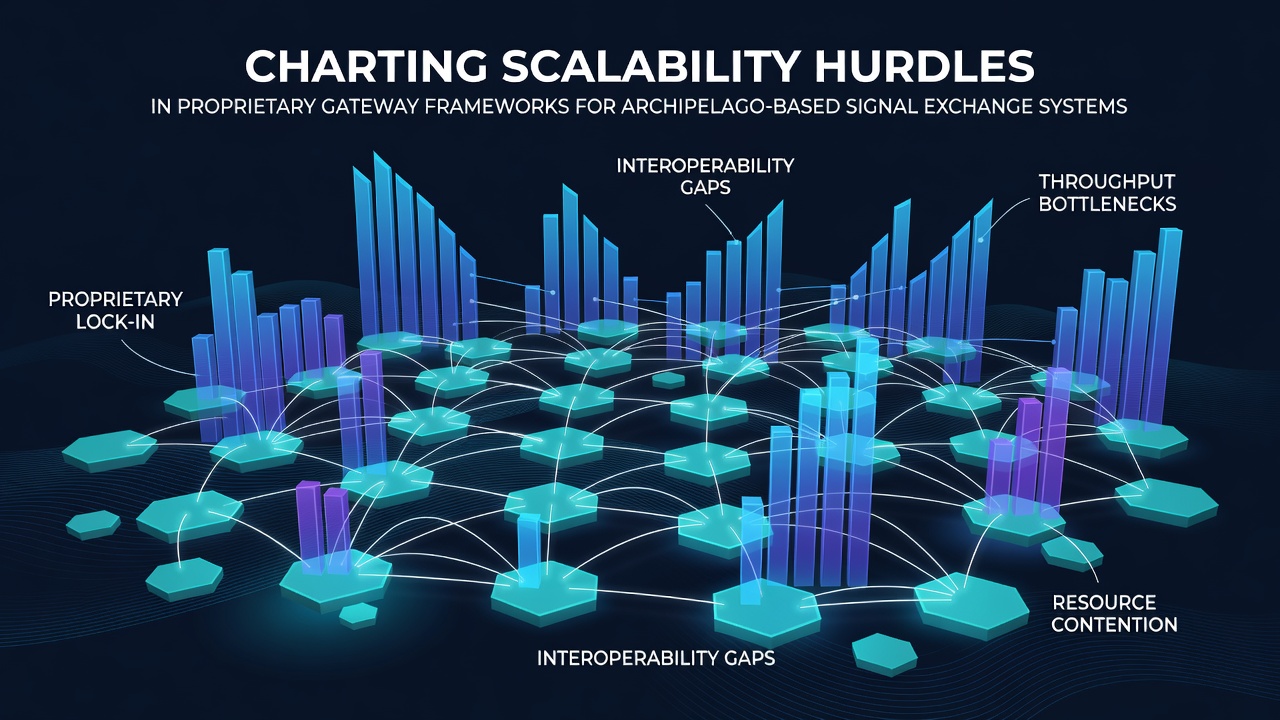
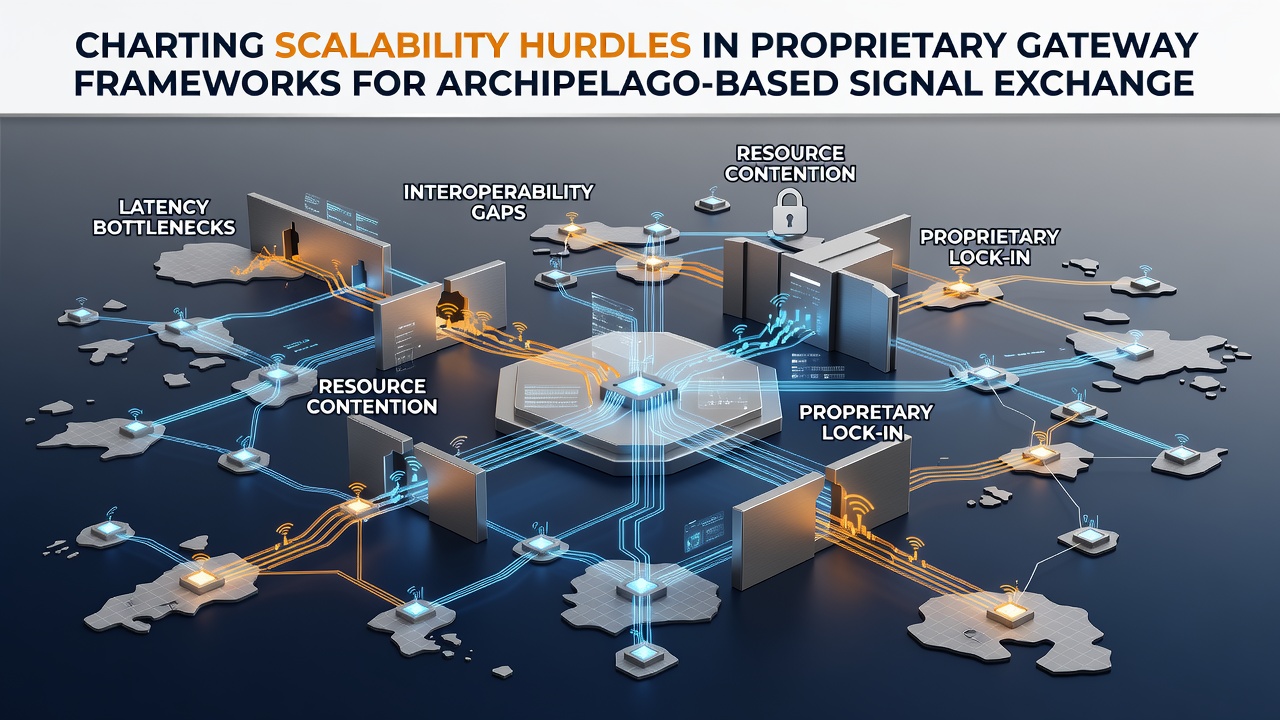
Proprietary gateway frameworks handle signal exchange across archipelago environments where islands create natural separation between network nodes and where distance plus terrain affect transmission reliability. These systems rely on custom protocols that connect remote sites through centralized control points yet the closed nature of the code limits external modifications when traffic volumes grow. Researchers tracking deployment patterns in regions such as Southeast Asia and the Caribbean note that initial setups perform adequately for low-density exchanges but encounter bottlenecks once node counts exceed several hundred active endpoints.
Core Components and Their Limitations
Each gateway manages routing authentication and data prioritization while proprietary encryption layers restrict third-party inspection or optimization. Engineers who have examined these setups report that the frameworks often bundle hardware-specific drivers with software stacks which creates dependency chains that resist incremental scaling. When additional islands join the network the gateways must renegotiate session states across longer paths and the proprietary handshakes consume increasing portions of available bandwidth before payload delivery begins.
Studies from institutions in Australia show that signal latency rises nonlinearly once the number of concurrent exchanges surpasses thresholds tied to the original design parameters. The Australian Communications and Media Authority has published infrastructure assessments indicating that remote coastal projects face similar constraints when expanding coverage across dispersed island groups.
Bandwidth Allocation and Node Growth Patterns
Signal exchange volumes in archipelago settings fluctuate with seasonal activity and emergency response demands so gateways must accommodate sudden spikes without prior notice. Proprietary systems allocate fixed buffers during setup and these allocations do not adjust dynamically when new nodes appear. Observers note that operators frequently add parallel gateways rather than upgrade existing ones because the framework code does not expose tuning parameters for larger routing tables.
Data collected from pilot installations reveal that packet loss rates climb when inter-island links operate above seventy percent utilization for extended periods. The closed architecture prevents load-balancing algorithms from accessing real-time topology information across vendor boundaries which leaves administrators managing separate clusters instead of a unified fabric.
Security Overheads and Maintenance Cycles
Encryption and authentication routines embedded in proprietary gateways add processing steps that scale poorly with message volume. Each new node requires certificate exchanges and key rotations that the framework executes sequentially rather than in parallel. Maintenance windows therefore lengthen as the system grows and operators schedule updates during low-traffic hours which proves difficult in regions where usage never fully drops.
Reports from the European Commission on digital infrastructure in outermost regions document comparable challenges when proprietary solutions serve scattered populations. Updates must propagate through every gateway without disrupting ongoing exchanges and the lack of open interfaces slows verification that patches have applied correctly across all sites.
Integration with External Networks
Archipelago signal systems sometimes connect to mainland carriers or satellite backbones yet proprietary gateways enforce strict boundary controls that complicate peering agreements. Standards-based alternatives allow modular expansion but closed frameworks require custom adapters that introduce single points of failure. Technicians working on such integrations describe repeated cycles of testing because each adapter must emulate the proprietary protocol exactly before traffic can flow.
October 2026 marks the scheduled release of updated interoperability guidelines from several regional bodies which may influence how operators approach future expansions. Early drafts suggest emphasis on exposing limited configuration APIs while preserving core encryption layers.
Resource Consumption Trends
CPU and memory demands inside each gateway increase as routing tables expand and session histories accumulate. Because the frameworks run on specialized hardware the only remedy often involves deploying additional units rather than optimizing existing ones. Field measurements from multiple archipelago projects indicate that power consumption per exchanged signal rises steadily once node density crosses initial design limits.
Academic analyses published in telecommunications journals highlight that open alternatives distribute processing across participating nodes whereas proprietary models centralize tasks at the gateway layer. This centralization simplifies initial deployment but creates choke points when traffic patterns shift unexpectedly.
Conclusion
Scalability hurdles in these proprietary gateway frameworks stem from closed code bases fixed resource allocations and sequential processing routines that resist expansion beyond original parameters. Operators managing archipelago signal exchange systems continue to track node growth against available capacity while awaiting clearer paths toward modular upgrades. Data from ongoing deployments provide concrete benchmarks that future framework revisions can address directly.